Unit 3: Routines
| Website: | Virtueller Campus Thüringen |
| Kurs: | Digital Learning Kit - self learning course for studying with digital tools |
| Buch: | Unit 3: Routines |
| Gedruckt von: | Gast |
| Datum: | Mittwoch, 14. Oktober 2026, 04:27 |
List of contents
Student reports
What does your daily study routine look like?
Here you can find the transcriptions of the interviews:
Build your own routine
We have a few tips for establishing and maintaining your own routines:
Tips for a good working environment
The Pomodoro technique
You're hanging in there and just can't get it together? You can't get into a flow of work? Then we have a tip for you: The Pomodoro technique. Pomodoro means "tomato" in Italian - you can quickly find out the history of the technique online if it interests you.
The technique is explained very quickly: Take 25 minutes, set a timer and don't let yourself be distracted by anything or anyone during this time. Concentrate fully on a pre-set task.
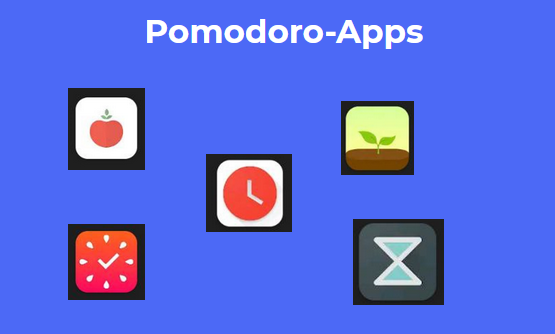
The timer is especially worthwhile for unpleasant tasks that you otherwise like to put off. There are also apps for this that block all other apps on the phone during these 25 minutes. Then you can take a 5-minute break and set another timer. Take note of your accomplishments and plan out the tasks you need to do before you start working.
When you notice that you are getting into a flow of work, a "flow", it is better to turn off the timer. Then it has done its job and you can really - undisturbed - start! For a flow of work, a break after 90 minutes is recommended. But you will also notice this when you get tired after a longer phase of concentrated work. You can find lots of videos on YouTube to help you use the Pomodoro technique.
Image: Pomodoro apps (icons).
You can find the apps in your Play- or Apple Store
Relaxation as a basis for success
Application
Since it’s one thing to receive tips and quite another to put them into practice, we’ve developed a reflection exercise for the Digital Learning Kit that you can use regularly—perhaps in conversation with a fellow student.
Take a look at the questions below as a conversation starter to help you discuss the module’s topics!